















Dubai Dummy Ticket: What It Is, Is It Legal, and How to Get One Right
-
Dummy Ticket Team
- September 14, 2026
- 7 min read


Here’s the thing that makes the UAE different from a lot of other destinations. This isn’t a case of “some consulates prefer a reservation.” The UAE’s own government spells out a return ticket as an actual entry condition. A Dubai dummy ticket for visa applications exists specifically to satisfy that condition without you paying full price for a flight before your visa even comes through.
This guide covers what that reservation should look like, whether it’s legal, what it actually costs, and one detail almost nobody mentions. Booking your onward and return on two different airlines can genuinely cause boarding problems at the airport, and there’s a simple fix for it.
What Counts as a Emirates/Dubai Dummy Ticket for a UAE Visa?
Most of the time, when people search for a Dubai Dummy ticket, they’re trying to solve one of two problems. Either a visa agent asked for proof of return travel, or they’ve heard the term and want to know if it’s actually a real thing.
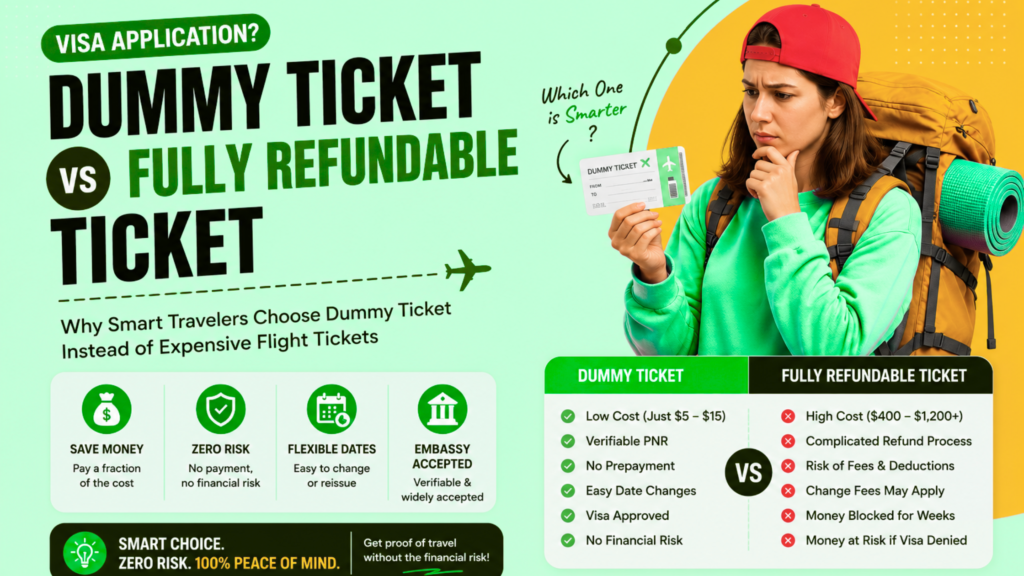
It is. A dummy ticket UAE applicants use is a genuine flight reservation, held in your name with a real PNR, that hasn’t been paid for or ticketed yet. It shows onward or return travel arranged, which the UAE treats as an entry condition rather than a soft preference.
Picture a common scenario. You’re applying for a UAE visit visa from Kerala, and your agent asks for proof of return travel before the application even gets submitted. You don’t want to buy a full priced ticket weeks in advance. A dummy ticket gives you a real booking reference and real dates without locking up your money on a flight you might reschedule anyway.
For more Info: Dummy ticket meaning
Is This Actually Legal to Use Dummy ticket for UAE Visa?
Yes, as long as it’s a genuine, checkable reservation. It only becomes a problem when the ticket is fabricated and can’t be verified against an airline’s actual system.
Travel agencies across India and the UAE routinely arrange these reservations for visit visa applicants, and it’s common enough that regional outlets have written about the standard practice of cancelling the outbound leg after entering the country. The line you don’t want to cross is submitting something that looks like a ticket but has no real booking behind it.
Why the UAE Treats a Return Ticket as a Real Entry Condition
This comes straight from the source. The UAE Ministry of Foreign Affairs states that one of the conditions of the entry visit visa is holding a return ticket, or at minimum a ticket showing onward travel to another destination.
This isn’t limited to visit visas either. General tourist and business entry conditions for several nationalities also list proof of onward or return airline tickets as a standard requirement, alongside proof of sufficient funds and documents showing the purpose of the trip. Resident and employment visa holders are the main exception, since their status already answers the “will you leave” question.
The Same Airline Trick Nobody Tells You About
Here’s the detail that causes real problems at the airport and barely gets mentioned anywhere. If your onward ticket and your return ticket are booked on two different airlines, some check in counters have trouble verifying the return leg, and that can hold up your boarding entirely.
Travel agencies in India have started specifically advising visit visa applicants to book both legs on the same airline for exactly this reason. When both tickets sit in one airline’s own system, the counter staff issuing your boarding pass can pull up and confirm the return booking directly. Split it across two carriers, and staff sometimes can’t verify it fast enough, which turns into exactly the kind of delay nobody wants at check in.
If you’re arranging a dummy return ticket Dubai bound travelers can actually rely on, ask your agent specifically whether both legs sit on the same airline. It’s a small detail that avoids a genuinely common headache.
Is OK to Board Still Required?
OK to Board, sometimes shortened to OKTB, used to be a separate clearance added to certain travelers’ PNRs before they could fly to the UAE, mainly for ECR passport holders and printed labour or work e-visa holders.
Recent airline advisories indicate this requirement was dropped for most UAE bound travelers from December 2024 onward. Rules like this shift fairly often though, so it’s worth a quick check with your airline or travel agent before you fly, especially if you’re on a work visa rather than a standard visit visa. This is separate from your dummy ticket. It’s about boarding clearance, not the reservation itself.
What Your Ticket Should Actually Include
Before accepting any reservation, check that it has:
- Your name spelled exactly as your passport shows it
- A real, searchable PNR you can verify on the airline’s own website
- A return or onward flight, not just a one way arrival
- Dates that make sense for your visa validity window
- Ideally, both legs booked through the same airline
Booking a Dummy Return Ticket for Dubai: Step by Step
- Confirm what your visa agent or sponsor actually needs. Some ask for a full round trip, others just want proof of onward travel to a third destination.
- Book both legs on the same carrier where possible. This avoids the verification issue at check in described above.
- Get your passport spelling and dates exactly right. Small mismatches cause more issues than the ticket format itself.
- Verify the PNR yourself before submitting anything. If it doesn’t pull up on the airline’s own site, don’t use it.
- Keep proof of funds and accommodation ready too. The return ticket is one condition among several, not the only one.
How Long Should the Hold Last?
There’s no single official number here since it depends on your provider, not UAE authorities directly. Most reservation services hold a PNR for one to three weeks, which usually covers the gap between arranging your visa and your actual travel date.
Match your hold period to your visa processing timeline rather than guessing. If your visit visa is still being processed, hold the ticket through your expected approval date plus a few extra days of buffer.
What Does It Actually Cost for Verifiable Dubai Dummy Ticket?
Third party reservation services for UAE bound travel commonly charge 15 to 50 dollars per PNR, depending on the provider and how long a hold you need. Booking both legs on the same airline sometimes costs a little more than mixing carriers, but it’s the safer choice given the boarding issue described earlier.
Mistakes That Get These Rejected
- A one way ticket with no return or onward leg. The UAE specifically asks for proof you’re leaving.
- Return and onward tickets split across two airlines. This is the boarding verification problem covered above.
- An expired hold. Processing took longer than expected and nobody renewed it in time.
- Name mismatches with the passport. Even a dropped middle name causes friction at the counter.
- Missing the other required documents. A perfect ticket won’t help if you’re missing proof of funds or accommodation.
FAQs
What is a dummy ticket for Dubai visa?
A flight reservation with a real, verifiable PNR, held in your name and used to satisfy the UAE’s return or onward travel requirement, without being paid for or issued.
Is a Dubai dummy ticket legal?
Yes, as a genuine reservation. It’s a problem only if the ticket is fake or can’t be verified against an airline’s own system.
Does the UAE really require a return ticket?
Yes. The UAE Ministry of Foreign Affairs lists a return ticket, or a ticket showing onward travel, as a condition of the entry visit visa.
Why should both legs be on the same airline?
Because check in counters can verify a return ticket faster when it’s in the same airline’s system. Mixed carriers have caused real boarding delays for some travelers.
How much does a dummy ticket UAE reservation cost?
Typically 15 to 50 dollars per PNR through a reservation service, depending on the hold length and whether both legs are on one airline.
Do resident or employment visa holders need this too?
No. The return ticket condition mainly applies to visit and tourist visa holders, since resident and employment status already covers the UAE’s requirement.